
Multiple Cores High-Temperature Cables
Multi-conductor fluorine plastic and silicone rubber cables for control panels, instrument racks, and automation cabinets.
What Are Multiple Cores Cables?
Multiple cores cables bundle 2 or more individually insulated high-temperature conductors -- fluorine plastic or silicone rubber -- inside a single outer jacket, instead of running separate single-conductor wires side by side. That matters in control panels, instrument racks, and automation cabinets where routing a dozen separate high-temp wires through a gland or conduit is impractical: one multi-core cable does the job of several single conductors while taking up a fraction of the routing space, and shielded constructions (FFRP, KFFRP) add a braided shield for signal and control circuits running near electrical noise.
Choosing Insulation and Shielding for Multi-Core Cable
The first decision is insulation family: fluorine plastic (FF/FFRP-3, KFF/KFFRP-3) or silicone rubber (YGZ, YGZP). Fluorine-insulated multi-core cable suits signal and control wiring up to 200°C with tighter, more consistent core dimensions, useful where multiple cores need to fit a specific connector pinout. Silicone-insulated multi-core cable (YGZ, YGZP) trades some of that dimensional precision for better flexibility and is the more common choice for power distribution in mobile or vibration-prone equipment rather than fixed instrumentation.
Shielding is the second decision, and it's not optional in every application -- it's specifically for circuits sharing routing with variable-frequency drives, motor leads, or other electrical noise sources. KFF/KFFRP-3's overall tinned-copper braid shield exists to protect low-level control and feedback signals from that induced interference; running an unshielded FF/FFRP-3 cable next to a VFD feeder risks exactly the kind of signal corruption the shield is there to prevent. For straightforward power distribution without adjacent noise sources, the unshielded YGZ or YGZP constructions are the simpler and lower-cost choice.
2-7 Cores
Multiple insulated conductors in one jacket -- compact routing versus separate single-conductor wires.
Shielded Options
FFRP / KFFRP constructions add a tinned-copper braid shield for noise-sensitive control and signal circuits.
Up to 200°C
Fluorine plastic or silicone rubber insulated cores rated for high-temperature panel and cabinet wiring.
Featured Multi-Conductor Cable Products
Our most-specified multi-core constructions — chosen for instrumentation, EMI-sensitive control, and heavy-duty power applications.
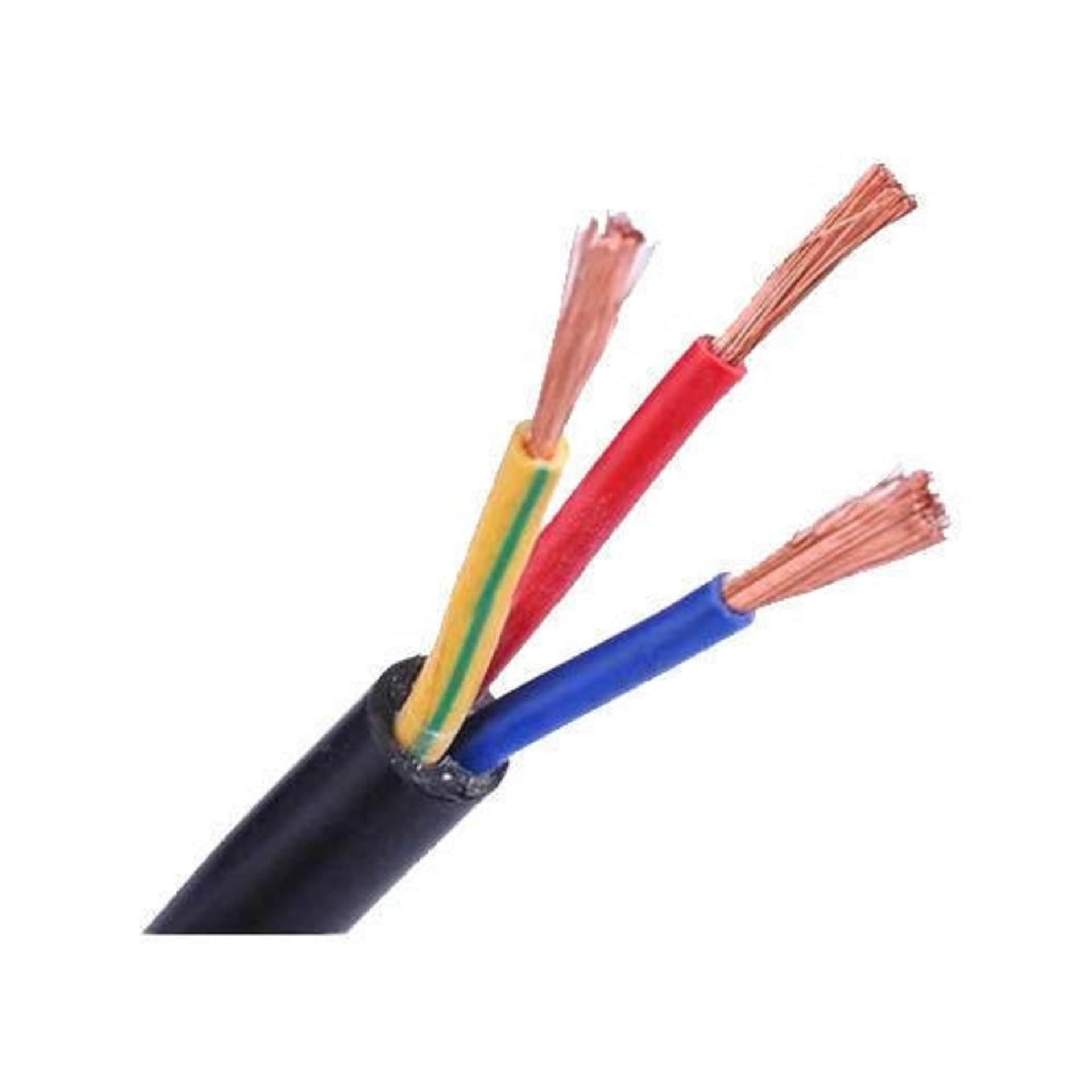 3-CORE
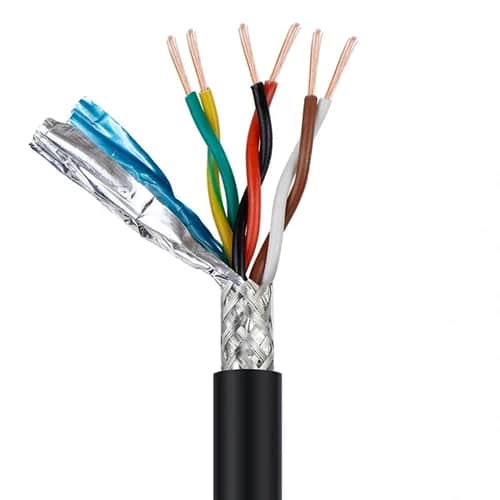 SHIELDED
Multiple Cores Cables Products
4 products in this family
Multiple Cores Cable FF/FFRP-3
Multi-conductor FEP fluorine plastic insulated cable with 3 cores for high-temperature signal and control applications.
- Rated to 200°C
- 300V voltage rating
- High-temperature control
Temp Range
200°C
Voltage
300V
Multiple Cores Cable KFF/KFFRP-3 Shielded
Shielded multi-conductor fluorine plastic cable with tinned copper braid for EMI protection in high-temperature environments.
- Rated to 200°C
- 300V voltage rating
- Industrial control systems
Temp Range
200°C
Voltage
300V
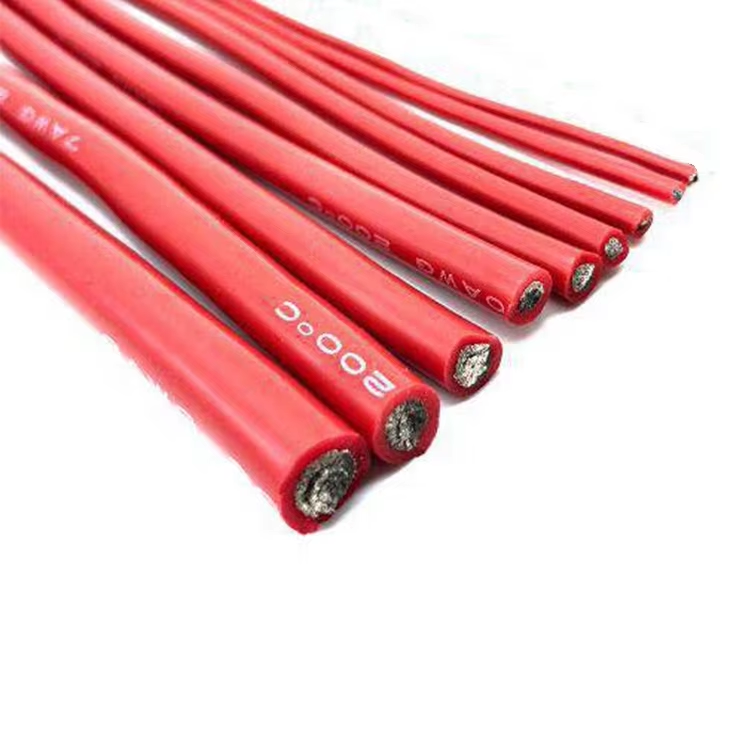
Multiple Cores Cable YGZP Silicone
Multi-conductor silicone rubber insulated cable with excellent flexibility for power and control in high-temperature installations.
- Rated to 180°C
- 450V/750V voltage rating
- Power equipment
Temp Range
180°C
Voltage
450V/750V
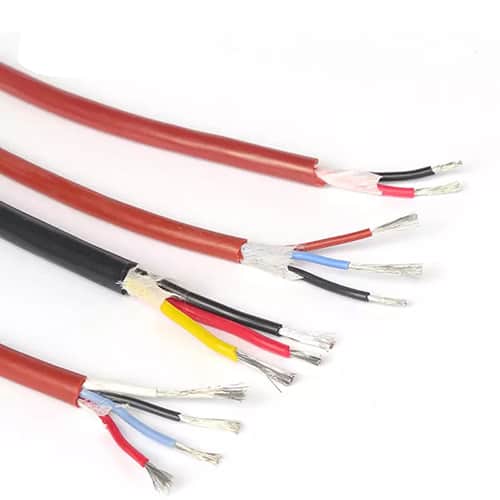
Multiple Cores Cable YGZ Heavy Duty
Heavy-duty multi-conductor silicone cable for high-current power applications in demanding industrial environments.
- Rated to 180°C
- 450V/750V voltage rating
- Heavy machinery
Temp Range
180°C
Voltage
450V/750V
Applications
Control Panels
- Control cabinet wiring
- Instrument panel wiring
- Multi-point signal runs
Automation
- Servo and motor control wiring
- VFD-adjacent shielded circuits
- Automated equipment wiring
Power Distribution
- Mobile equipment power runs
- Vibration-prone installations
- Compact panel routing
Need a Custom Core Count or Shielding Spec?
Our engineering team can match conductor stranding, wall thickness, and color coding to your exact requirement.
Multiple Cores Cables FAQ
When do I need a shielded multi-core cable (KFF/KFFRP-3) instead of unshielded (FF/FFRP-3)?
Specify shielded construction whenever the cable shares routing with VFDs, motor leads, or other sources of electrical noise -- the braided shield protects low-level control and feedback signals from induced interference. For power distribution without nearby noise sources, unshielded is sufficient.
What's the difference between fluorine-insulated (FF/FFRP) and silicone-insulated (YGZ/YGZP) multi-core cable?
Fluorine-insulated cable has tighter, more consistent core dimensions and suits fixed instrumentation and signal wiring. Silicone-insulated cable is more flexible and better suited to power distribution in mobile or vibration-prone equipment.
How many conductors can these cables carry?
Current constructions in this family range from 3 to 4 cores. For higher core counts, contact our engineering team -- custom conductor counts are available on request.
What's the temperature rating for multi-core high-temp cable?
Up to 200°C across this family, consistent with the fluorine plastic and silicone rubber insulation systems used in the individual cores.