
Fluorine Plastic (FEP/PTFE) Insulation Wire
Non-stick, chemically resistant fluoropolymer insulated wire rated up to 250°C -- for semiconductor, aerospace, and chemical processing environments.
What Is Fluorine Plastic Insulation Wire?
Fluorine plastic insulation wire uses FEP (fluorinated ethylene propylene) or PTFE (polytetrafluoroethylene) as the insulating layer instead of PVC or rubber. Both are fluoropolymers prized for a combination that ordinary plastics can't match: continuous operation up to 250°C, a non-stick surface that resists almost every industrial solvent and acid, and stable dielectric properties across that entire temperature range. That combination is why fluorine plastic wire shows up wherever standard PVC hook-up wire would degrade, crack, or off-gas -- inside semiconductor process equipment, aircraft avionics bays, and chemical plant instrumentation panels.
FEP vs. PTFE: How to Choose
Choosing between FEP and PTFE insulation starts with the actual temperature and mechanical demands of the installation. FEP (used in the FF46-1, FF46-2, and UL1901 constructions) is melt-processable, giving it a smoother, more consistent wall thickness and slightly better flex life, and it's the more common choice for general internal wiring in appliances, lighting fixtures, and electronic equipment rated to 200°C. PTFE (used in the AF250 and AFR250 constructions) has a higher continuous temperature rating -- up to 250°C -- and marginally better chemical resistance, but it's harder to extrude to tight tolerances and typically costs more per foot, so it tends to get specified when the extra 50°C of headroom or a specific MIL-SPEC requirement is a hard project requirement rather than a nice-to-have.
Conductor construction is the second specification axis. Silver-plated copper conductors, used across this entire family, prevent the copper from oxidizing at sustained high temperature -- plain bare copper will oxidize and increase contact resistance over years of thermal cycling, which silver plating avoids. Stranding matters more here than in ordinary hook-up wire: standard-stranded constructions (like AF250) suit fixed installations, while extra-fine stranded, flex-rated constructions (like AFR250) are worth the added cost anywhere the wire sees repeated flexing or vibration, such as equipment mounted near motors or on moving assemblies.
Up to 250°C
Continuous operation from FF46-series FEP (200°C) up to PTFE AF/AFR series (250°C).
Chemical Resistant
Non-stick fluoropolymer surface resists solvents, acids, and fuels that degrade PVC and rubber insulation.
UL / MIL-SPEC
UL 1330/1331/1332/1333/1901 listed constructions plus MIL-W-16878 compliant PTFE options.
Featured Fluorine Plastic Wire Products
Our most-specified FEP and PTFE constructions — chosen for general wiring, aerospace, and precision electronics applications.
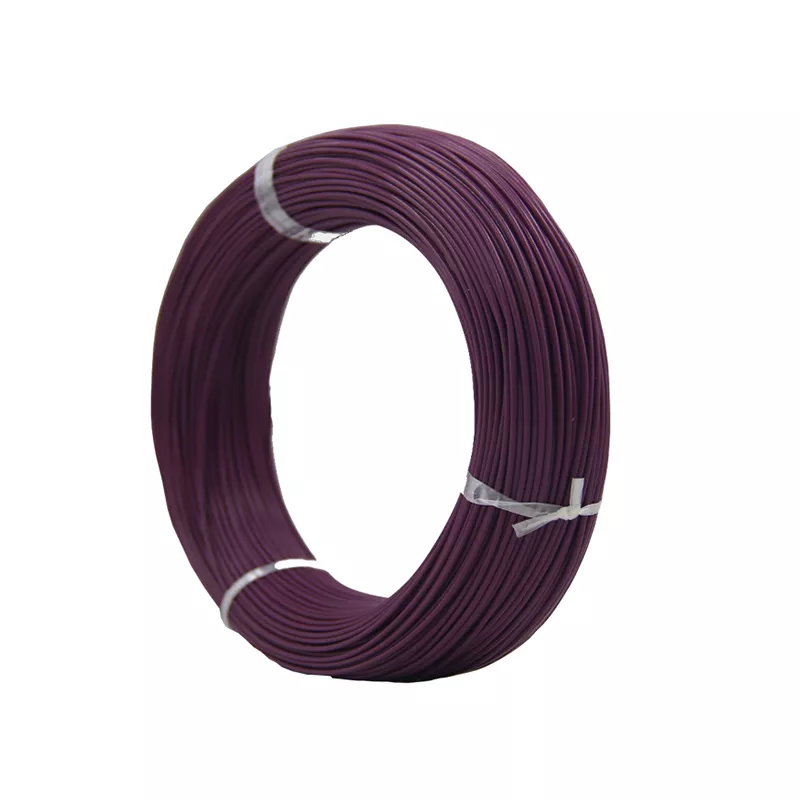 BESTSELLER
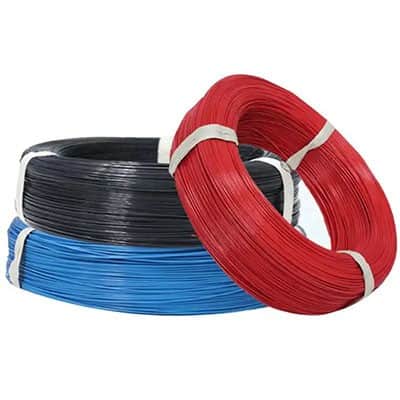 250°C PTFE
Fluorine Plastic Insulation Wire Products
5 products in this family
Fluorine Plastic Wire FF46-1 Type
FEP fluorine plastic insulated wire for extreme temperature applications up to 200°C with excellent chemical resistance.
- Rated to 200°C
- 600V voltage rating
- High-temperature wiring
Temp Range
200°C
Voltage
600V
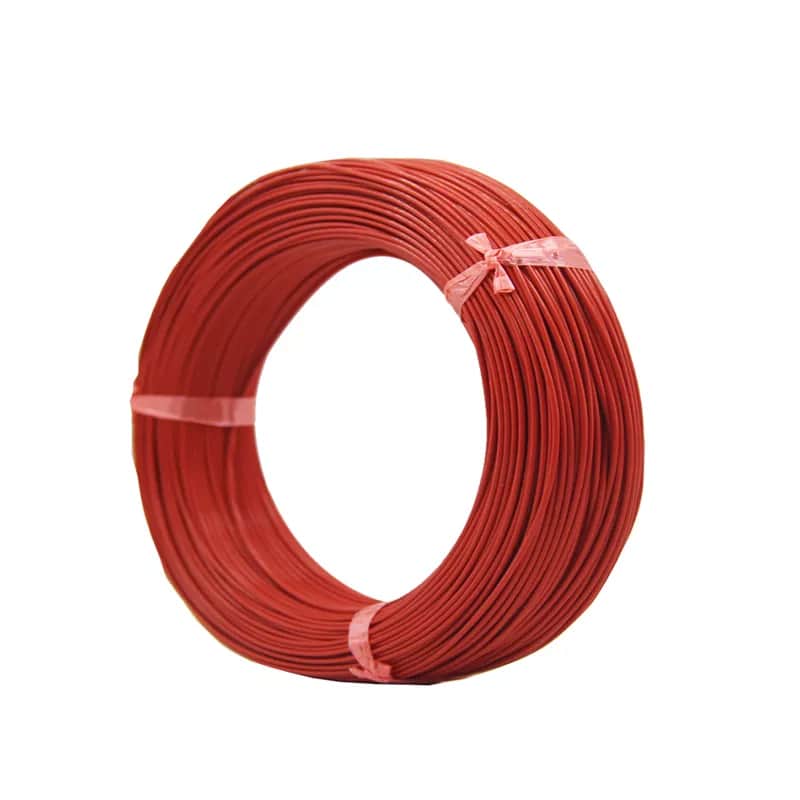
Fluorine Plastic Wire FF46-2 Type
Heavy-duty FEP fluorine plastic wire with enhanced insulation thickness for demanding industrial applications.
- Rated to 200°C
- 600V voltage rating
- Internal wiring
Temp Range
200°C
Voltage
600V
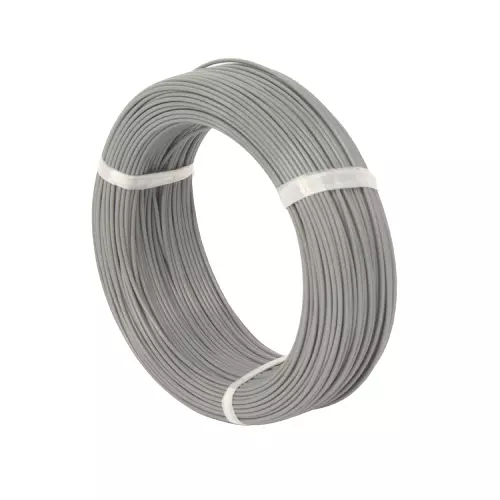
Fluorine Plastic Hook-Up Wire UL1901
Premium FEP hook-up wire for precision electronics and high-reliability applications.
- Rated to 200°C
- 300V voltage rating
- Electronics
Temp Range
200°C
Voltage
300V
PTFE Wire AF250 High Temperature
PTFE insulated wire for extreme temperature applications up to 250°C with superior chemical resistance.
- Rated to 250°C
- 250V voltage rating
- Aerospace
Temp Range
250°C
Voltage
250V
PTFE Wire AFR250 Flexible High Temperature
Flex-rated PTFE insulated wire with extra-fine stranded conductor for extreme temperature applications up to 250°C requiring repeated flexing or vibration resistance.
- Rated to 250°C
- 250V voltage rating
- Aerospace
Temp Range
250°C
Voltage
250V
Applications
Semiconductor & Electronics
- Process equipment internal wiring
- Precision instrument wiring
- PCB-to-connector jumpers
Aerospace & Military
- Avionics bay wiring
- MIL-SPEC hook-up wire
- High-reliability harness assemblies
Chemical & Industrial
- Chemical processing equipment
- Furnace and oven internal wiring
- Appliance internal wiring
Need a Custom FEP or PTFE Spec?
Our engineering team can match conductor stranding, wall thickness, and color coding to your exact requirement.
Fluorine Plastic Wire FAQ
What's the difference between FF46-1 and FF46-2?
Both are FEP fluoroplastic constructions rated to 200°C, but FF46-2 uses a thicker insulation wall (aligning with UL1332/UL1333) for heavier-duty applications, while FF46-1 (aligning with UL1330/UL1331) is the lighter, more common construction for general internal wiring and hook-up applications.
Should I choose FEP (FF46/UL1901) or PTFE (AF250/AFR250)?
Choose PTFE when the application needs continuous operation above 200°C (up to 250°C) or specifically calls for MIL-SPEC compliance. Choose FEP for general internal wiring up to 200°C where its smoother extrusion and slightly lower cost per foot are the better fit.
What is the difference between AF250 and AFR250?
AF250 uses a standard stranded silver-plated copper conductor for fixed installations. AFR250 uses an extra-fine stranded conductor for applications that see repeated flexing or vibration, such as equipment mounted near motors or on moving assemblies.
Is fluorine plastic wire safe for direct chemical exposure?
FEP and PTFE both resist the overwhelming majority of industrial acids, solvents, and fuels, which is why this family is standard in chemical processing and semiconductor equipment. For exposure to a specific aggressive chemical, confirm compatibility against that chemical's specification sheet before final selection -- no insulation material is universally chemical-proof.