
Compensating Lead Wire
Type K, J, and T thermocouple extension cable for precise temperature measurement.
What Is Compensating Lead Wire?
Compensating lead wire (also called thermocouple extension wire) connects a thermocouple sensor back to its measurement instrument using conductor alloys matched to the thermocouple's own thermoelectric properties -- Type K (chromel/alumel), Type J (iron/constantan), and Type T (copper/constantan) in this catalog. Using ordinary copper wire for that run introduces an unintended second thermocouple junction at every connection point, corrupting the temperature reading. Matched compensating lead wire avoids that error, which is why it's a specified, type-matched component rather than a generic hook-up wire substitute.
Matching Lead Wire to Your Thermocouple Type
Thermocouple type has to match end-to-end: the lead wire's alloy pair must correspond exactly to the thermocouple it's extending. Type K (KX) is the most common choice for general industrial process control, covering a wide range at moderate cost. Type J (JX) is common in older industrial equipment and food processing. Type T (TX) is preferred for cryogenic and low-temperature applications. Mixing types anywhere in the circuit -- using KX lead wire with a Type J thermocouple, for instance -- introduces an unmeasured junction error that can't be corrected without replacing the mismatched segment.
Color coding and twisted-pair construction matter more here than in power wiring because the signal itself is a few millivolts, easy to swamp with noise or corrupted by a reversed polarity connection. All three types in this family use ANSI MC96.1 standard color coding and twisted-pair construction specifically to reduce electromagnetic interference and make correct-polarity termination straightforward for field technicians working from standard wiring diagrams.
Type K, J, T
Matched alloy pairs (chromel/alumel, iron/constantan, copper/constantan) for accurate thermocouple extension.
0.5°C Tolerance
Standard Class 1 tolerance for precision temperature measurement in industrial process control.
ANSI MC96.1 / IEC 60584
Standard color coding and twisted-pair construction compliant with both major thermocouple standards.
Featured Compensating Lead Wire Products
Our most-specified thermocouple extension wire types — Type K, J, and T for every temperature measurement application.
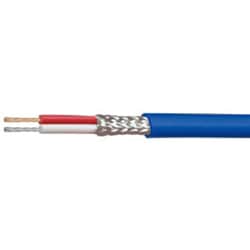 TYPE K
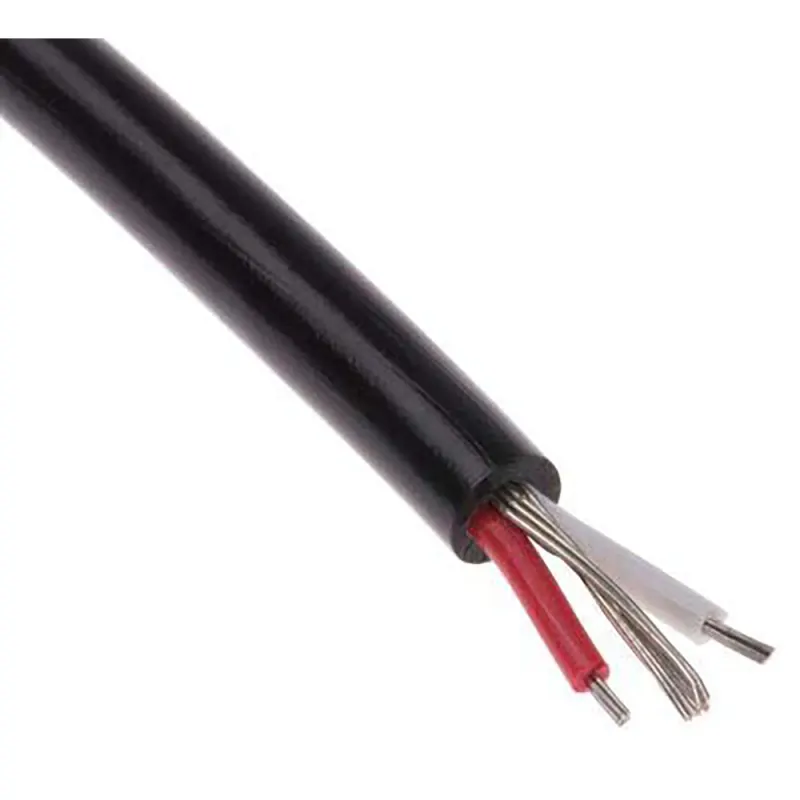 TYPE J
Compensating Lead Wire Products
3 products in this family
Type KX Compensating Lead Wire
Type K thermocouple extension wire with chromel-alumel conductors for precision temperature measurement in industrial processes.
- Rated to 105°C
- 200V voltage rating
- Industrial furnaces
Temp Range
105°C
Voltage
200V
Type JX Compensating Lead Wire
Type J thermocouple extension wire with iron-constantan conductors for accurate temperature sensing in moderate temperature ranges.
- Rated to 105°C
- 200V voltage rating
- Plastics processing
Temp Range
105°C
Voltage
200V
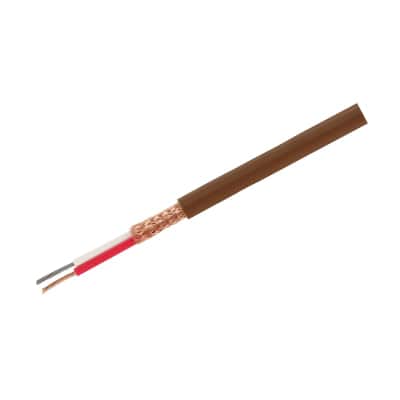
Type TX Compensating Lead Wire
Type T thermocouple extension wire with copper-constantan conductors for cryogenic and low-temperature applications.
- Rated to 105°C
- 200V voltage rating
- Cryogenic systems
Temp Range
105°C
Voltage
200V
Applications
Industrial Process Control
- Furnace and kiln monitoring
- Petrochemical processing
- Power generation monitoring
Food & HVAC
- Food industry ovens
- HVAC systems
Laboratory & Instrumentation
- Laboratory equipment
- Precision temperature measurement
Need a Custom Thermocouple Type or Length?
Our engineering team can match conductor stranding, wall thickness, and color coding to your exact requirement.
Compensating Lead Wire FAQ
Why can't I just use copper wire to extend a thermocouple?
Copper wire has different thermoelectric properties than the thermocouple's own alloys, so every copper connection point creates an unintended second thermocouple junction that corrupts the temperature reading. Compensating lead wire uses matched alloys specifically to avoid that error.
How do I know which type -- KX, JX, or TX -- I need?
Match the lead wire type exactly to your thermocouple type: KX for Type K, JX for Type J, TX for Type T. The lead wire and thermocouple alloys must correspond end-to-end; mixing types introduces an uncorrectable measurement error.
Can I mix thermocouple types in the same circuit?
No. The lead wire type must match the thermocouple type throughout the circuit, from sensor to cold junction compensation. Mixing types creates a junction error that can only be fixed by replacing the mismatched segment.
What's the temperature range for compensating lead wire?
This family covers -200°C to +105°C, reflecting the PVC insulation's own temperature limit -- note this is the lead wire's insulation rating, not the temperature range of the thermocouple sensor itself, which can measure far higher or lower temperatures at the measurement junction.