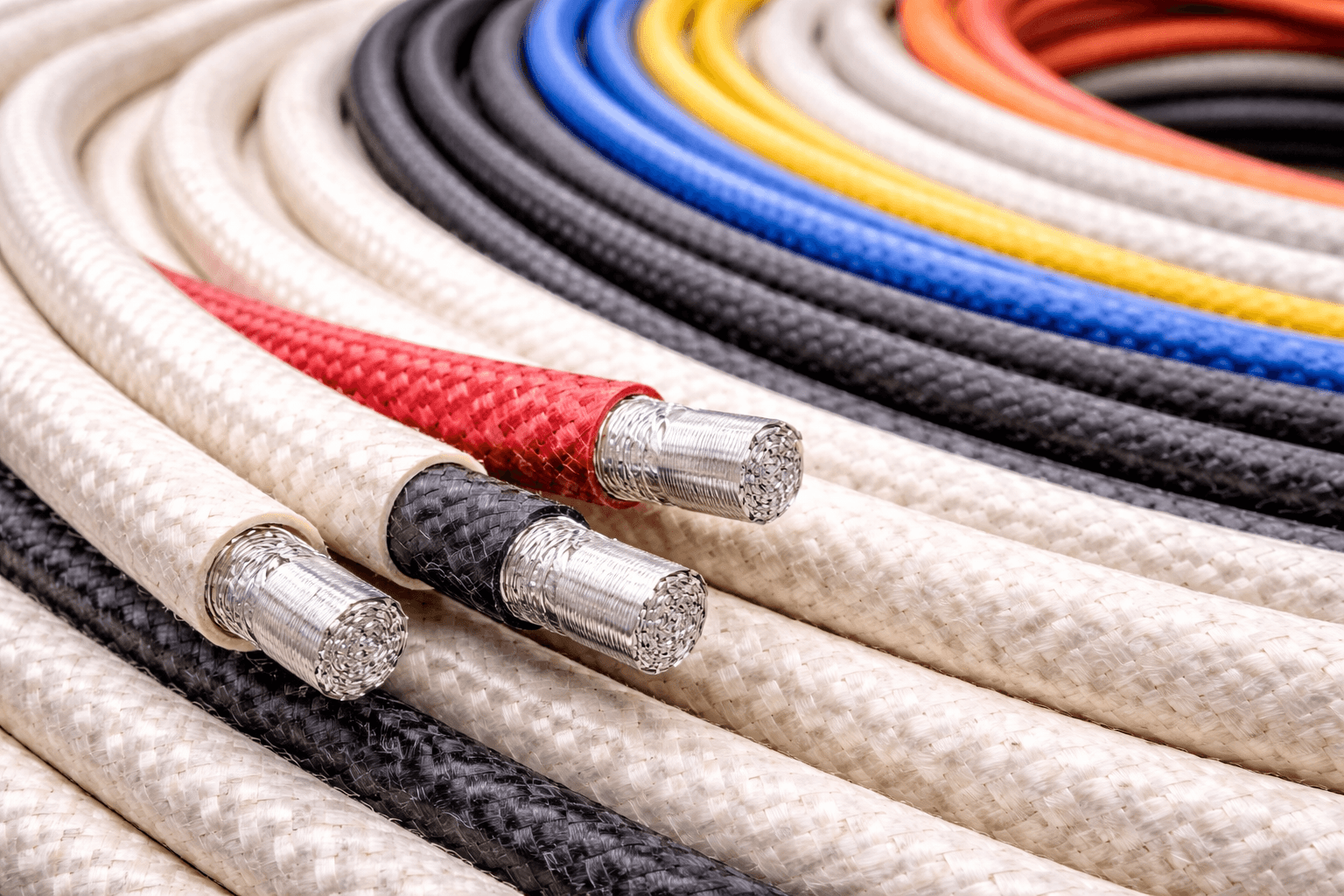
Fire alarm systems, emergency lighting, sprinkler pumps, and smoke extraction fans all depend on cables that survive direct flame exposure for 30 to 120 minutes. Standard PVC or XLPE cables fail within minutes at 750–1,000 °C. This guide covers the six steps to selecting the right fire resistant cable.
Key Terms You Should Know
- Fire Resistant (FR) — Cable maintains circuit integrity (continues to carry current) when exposed to direct flame. Tested to IEC 60331.
- Fire Retardant — Cable resists flame propagation along its length. Tested to IEC 60332. Does not maintain circuit integrity.
- LSZH — Low Smoke Zero Halogen sheath material that produces minimal toxic fume and smoke. A material property, not a fire resistance rating.
- Mineral Insulated (MI) — Cable construction using compressed magnesium oxide as insulation inside a metal sheath. Inherently fire proof.
- Circuit Integrity — The ability of a cable system (cable + accessories + supports) to continue functioning during a fire.
6 Steps to Choosing the Right Fire Resistant Cable
Identify Fire Survival Circuits
Focus on life-safety systems: fire alarms, emergency lighting, smoke extraction, sprinkler pumps, and firefighter lifts. General power and data circuits typically need only flame-retardant or LSZH sheathing.
Determine the Required Fire Rating
IEC 60331 tests at 750 °C with direct flame. Ratings: FE 30 (30 min), FE 60, FE 90, FE 120. High-rise buildings and tunnels typically require FE 120.
Choose the Cable Construction
Three options: Mica-tape wrapped (most common, cost-effective), Mineral insulated / MI (extremely durable but rigid), or Enhanced XLPE/LSZH with mica barriers (good flexibility and performance balance).
Specify Smoke & Toxicity Performance
In tunnels, hospitals, and malls, specify LSZH sheathing to minimize toxic fumes. Relevant tests: IEC 61034 (smoke density) and IEC 60754 (halogen content).
Verify Voltage & Conductor Sizing
Available in low-voltage (0.6/1 kV) and medium-voltage (up to 36 kV). Account for de-rating factors in fire-rated enclosures.
Plan Fire-Rated Installation
Use fire-rated clips and cleats that won't collapse. Segregate fire survival circuits from standard wiring. Seal all wall/floor penetrations with approved fire-stop systems.
Common Mistakes to Avoid
- Confusing fire retardant with fire resistant. Fire retardant (IEC 60332) slows flame spread but does not maintain circuit integrity. Fire survival requires fire resistant cable (IEC 60331).
- Ignoring the support system. Plastic clips melt in a fire. Use fire-rated metal cleats tested alongside the cable.
- Forgetting fire stops at penetrations. Every cable passage through a fire-rated wall or floor must be sealed with an approved fire-stop system.
Key Standards Reference
| Standard | What It Tests |
|---|---|
| IEC 60331 | Fire resistance — circuit integrity under flame at 750 °C |
| IEC 60332-1 / -3 | Flame retardancy — single cable and bunched cable tests |
| IEC 61034 | Smoke density — light transmittance during combustion |
| IEC 60754 | Halogen content and acidity of combustion gases |
| BS 7846 | 600/1000V fire resistant armoured cable (UK standard) |
| BS 8519 | Code of practice for fire-resistant cable system installation |
Summary
Fire resistance is a system property — cable, terminations, supports, and fire stops must all be rated together. Choose the construction type (mica-tape, MI, or enhanced XLPE) based on your fire rating, budget, and installation constraints. Contact our team for project-specific recommendations.